
Currently Empty: Rs.0.00

How to Develop Problem-Solving Skills in Math for Children?
September 2, 2026
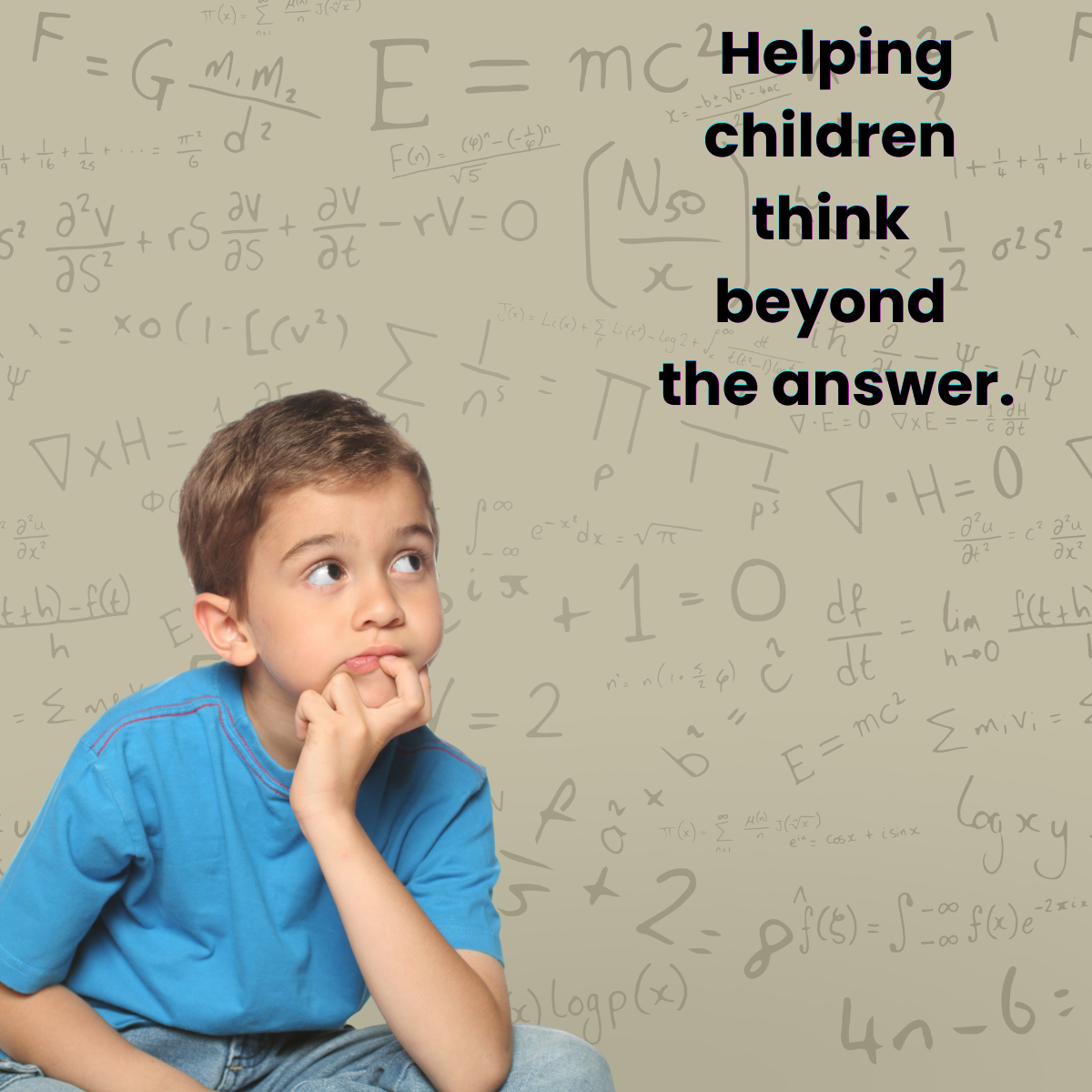
A child may understand addition, subtraction, multiplication and division but still struggle when faced with a new math problem.
Many parents notice this.
Their child can solve questions they have practised before, but when the same concept appears in an unfamiliar way, they are unsure where to begin.
This is where problem-solving skills become important.
Problem-solving is not simply about finding difficult questions or getting the answer quickly. It is about learning how to understand a problem, explore possible approaches and work towards a solution.
So, how can children develop stronger problem-solving skills in math?
What Are Problem-Solving Skills in Math?
Mathematical problem-solving involves more than knowing a formula or following a method.
When faced with an unfamiliar question, a child may need to:
- Understand what the question is asking.
- Identify the important information.
- Look for patterns or relationships.
- Decide which approach might work.
- Try a strategy.
- Check whether the answer makes sense.
The important thing is that children will not always know the solution immediately.
Problem-solving begins when they learn to ask:
“What can I try?”
1. Encourage Children to Understand the Problem First
Many children rush into calculations before fully understanding the question.
This is particularly common with word problems.
Before solving, encourage your child to pause and ask:
- What am I trying to find?
- What information has been given?
- What information is important?
A simple question such as:
“Can you explain this problem in your own words?”
can help children think more carefully.
Parents do not always need to explain the solution. Sometimes, giving a child time to understand the problem is more helpful than immediately showing them what to do.
Children who regularly rush through questions may also benefit from understanding why they make careless mistakes in math.
2. Don’t Always Tell Them Which Method to Use
When a child gets stuck, it is tempting to say:
“Use multiplication.”
or:
“First subtract this number.”
While this may help them finish the question quickly, it removes an important part of problem-solving: deciding how to approach the question.
Instead, try asking:
- “What have you tried so far?”
- “What do you already know?”
- “What could you try first?”
These questions provide guidance without immediately giving away the solution.
Children should not be left frustrated for too long, and a hint can certainly help. But giving them a chance to think independently is an important part of developing problem-solving skills.
3. Encourage Different Ways of Thinking
Consider this question:
25 + 19 = ?
One child may use the standard addition method.
Another may think:
25 + 20 = 45
So:
25 + 19 = 44.
Both approaches work.
Children do not need to find multiple solutions to every question. But occasionally asking:
“Can you think of another way?”
encourages flexibility.
This can be particularly useful when they face unfamiliar questions. If one approach does not work, they begin to understand that there may be another way forward.
4. Break Difficult Problems Into Smaller Steps
A complicated problem can feel overwhelming when a child tries to solve everything at once.
Encourage them to break it down.
Instead of thinking:
“How do I solve this entire question?”
they can ask:
- What do I know?
- What do I need to find?
- What can I work out first?
Sometimes, the first step is not even a calculation.
It may simply be organising the information.
Breaking a problem into smaller parts can make a difficult question feel more manageable and helps children develop a clear approach.
5. Look for Patterns and Use Visuals
Not every math problem needs to be solved entirely in the head.
Children can use:
- Diagrams
- Drawings
- Tables
- Number lines
to organise information and understand relationships.
Patterns can also provide useful clues.
For example:
2, 5, 8, 11, __
Before doing anything complicated, a child may notice that the numbers increase by 3 each time.
Encourage questions such as:
“What do you notice?”
and:
“What seems to be changing?”
Sometimes, noticing a pattern is the first step towards solving the problem.
6. Help Children Learn From Mistakes
Mistakes are a normal part of problem-solving.
A child may misunderstand the question, choose the wrong operation or try a strategy that does not work.
Instead of immediately saying:
“That’s wrong.”
try asking:
“Can you show me how you thought about this?”
This helps identify where the problem occurred.
A child who makes a calculation mistake may need something different from a child who misunderstood the question.
Understanding the reason behind an error is often more useful than simply knowing that the answer was incorrect.
7. Give Children the Right Kind of Practice
Practice is important.
But children need more than repetitive questions.
They also need opportunities to solve questions that make them:
- Think about unfamiliar situations.
- Identify useful information.
- Look for patterns.
- Choose a strategy.
- Apply concepts in different ways.
A good balance includes both:
Practice for fluency and practice for thinking.
This is particularly useful for children preparing for math competitions and Olympiads, where questions may require familiar concepts to be applied in unfamiliar ways.
You can also read our guide on how to prepare for Math Olympiad.
[Internal Link: How to Prepare for Math Olympiad]
How Parents Can Help
Parents do not need to become math teachers.
Often, the questions you ask can encourage better thinking.
Try asking:
“What do you notice?”
“What is the question asking?”
“What could you try first?”
“How did you think about that?”
“Does your answer make sense?”
These simple questions shift attention from simply getting the answer to understanding the process.
Final Thoughts
Developing problem-solving skills in math takes time.
It is not about finding the answer faster or getting every question right on the first attempt.
It is about helping children develop the confidence to face an unfamiliar question and think:
What do I know?
What is the problem asking?
What can I try?
Does my answer make sense?
With regular practice and thoughtfully designed questions, children can gradually become more comfortable with unfamiliar problems.
For students in Grades 4–6, practising questions that encourage thinking, pattern recognition and logical reasoning can help build these skills over time.
(Check our quizzes from Grade 4-6 here)
At Simplified Mathematics, children practise through carefully designed quizzes that encourage them to engage with questions and think through possible approaches.
Because becoming better at math is not only about knowing the answer.
It is also about learning how to find it.

